
Latest News & Projects
-
How To Avoid Screed Failures On Large Commercial Projects

Floor screed failures on large commercial projects are more common than they should be, and the consequences are rarely minor.
Click Here
A failed screed can delay the entire programme, hold up subsequent trades, require costly remedial work and, in the worst cases, result in a floor that needs to be completely removed and re-laid. The good news is that the vast majority of screed failures are preventable.
They almost always result from errors in specification, preparation or installation rather than from any inherent weakness in the materials themselves. Here is what main contractors and developers need to know to avoid them.
Specify The Right Screed For The Application
Screed failures frequently begin at the specification stage, long before any material is poured. Selecting a screed product without properly considering the specific demands of the application is one of the most common routes to a poor outcome.
The key factors that should inform the specification include the size of the floo... -
Floor Levelling & Screeding - Car Showroom Renovation In Derby
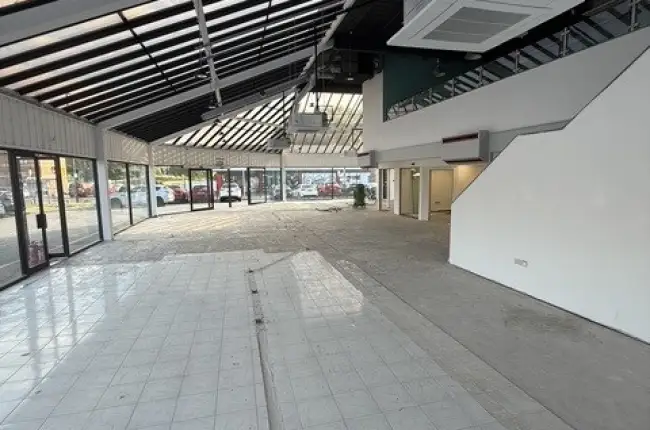
We were recently brought in to carry out specialist floor preparation and screeding works as part of a commercial renovation at a new car showroom in Derby.
Click Here
The customer required a full tiled floor finish throughout the ground floor of the showroom, but before any tiling could begin, the existing floor presented a significant challenge.
Multiple level variations across the slab meant that the surface was far from ready to receive tiles directly, and a thorough programme of preparation and levelling was needed to bring the entire floor up to a consistent, accurate level across the full area.
The Challenge: Multiple Floor Levels
In a commercial renovation of this nature, inconsistent floor levels are one of the most common obstacles a specialist flooring contractor will encounter. Older concrete slabs, construction joints and previous finishes all contribute to a floor surface that rises and falls across its area, sometimes significantly.
On this project in Derby, the variation acro... -
How To Prepare A Subfloor Before Screeding

Floor screed is only as good as the surface it is laid on. No matter how well a screed is mixed, pumped and finished, if the subfloor beneath it has not been properly prepared, the finished result will be compromised.
Click Here
Poor subfloor preparation is one of the most common causes of screed failure, leading to problems such as cracking, delamination, uneven surfaces and poor adhesion that can be both costly and disruptive to put right.
Here is what proper subfloor preparation involves and why each stage matters.
Why Subfloor Preparation Matters
Screed is applied as a relatively thin layer over the subfloor, typically between 40mm and 75mm depending on the application and whether underfloor heating is present.
At these depths, any irregularities, contaminants or weaknesses in the surface below will directly affect the performance of the screed above.
A subfloor that is not clean, sound and correctly prepared will prevent the screed from bonding or curing correctly, regardless of the qu... -
Liquid Anhydrite Screed & Underfloor Heating Installation - Draycott, Derbyshire
We were recently brought in to carry out a specialist floor screeding and underfloor heating installation as part of a private renovation project at an older property in Draycott, Derbyshire.
Click Here
The existing floor had been completely dug out and removed by the main contractor, and a new concrete sub-floor had been installed in its place.
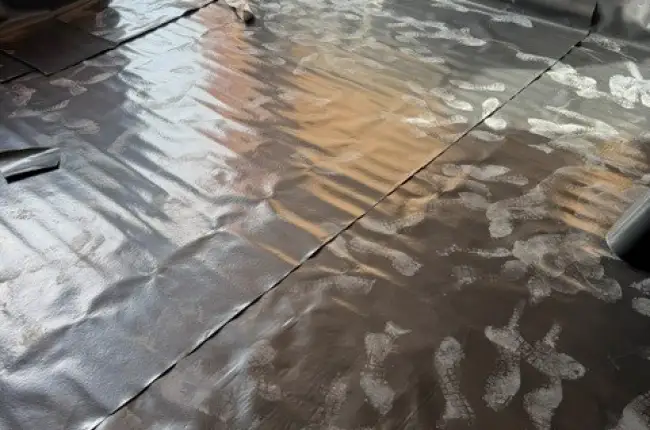
Our scope of work covered everything from the damp proof membrane through to the installation of the underfloor heating manifold and pipework, right through to the final liquid anhydrite screed pour across the whole property.
The customer was delighted with the results, and we completed the entire screed installation in a single day.
Level Variations In An Older Property
Older properties present particular challenges when it comes to floor screeding, and this job in Draycott was no exception.
With a property of this age, varying floor levels between rooms and across thresholds are common, and achieving a consistent, smooth finish that ties all of th... -
How Liquid Screed Is Transforming Large-Scale Construction Projects
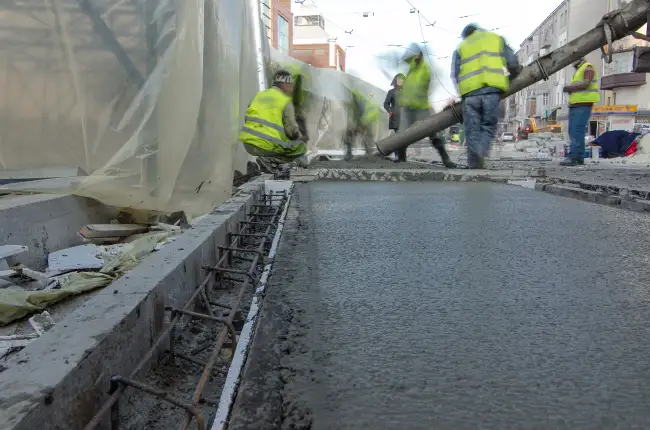
The way floors are prepared and finished on large construction projects has changed significantly over the past two decades.
Click Here
Liquid screed, once considered a specialist product used only in specific circumstances, has become the go-to flooring solution for developers, main contractors and construction companies working on projects of scale.
Here is a look at why liquid screed has become so widely adopted and what sets it apart from traditional methods on large sites.
What Is Liquid Screed?
Liquid screed, also known as flow screed or self-levelling screed, is a screed material with a fluid consistency that is pumped into place and self-levels across the floor area.
Unlike traditional sand cement screed, which must be mixed, transported and spread by hand, liquid screed is produced in large volumes and delivered to site via a pump and hose system, flowing across the floor and finding its own level with minimal amounts of manual intervention.
The two most common types of liqui... -
Liquid Anhydrite Screed With Underfloor Heating In Derbyshire
Location: Draycott, Derbyshire
At Mitchell Plastering & Dry Lining Ltd, we take pride in delivering comprehensive floor screeding solutions that combine efficiency with exceptional quality.
Click Here
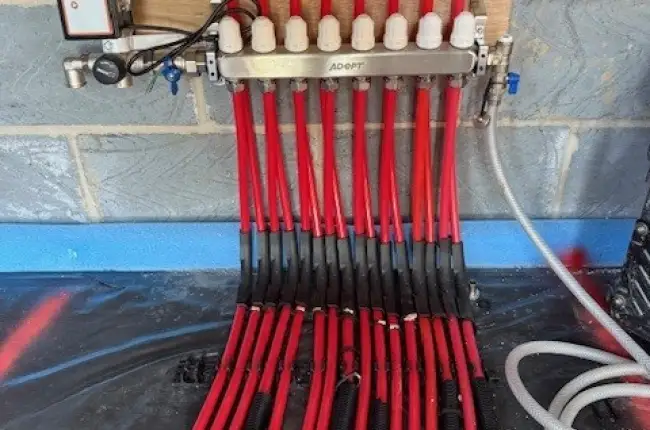
Recently, we completed a flooring project in Draycott for one of our regular builder clients, demonstrating our expertise in liquid anhydrite screed and underfloor heating systems.
Initial Preparation
This particular project involved transforming a 70m2 property with a complete floor screeding system that would provide both thermal efficiency and a perfectly level surface for the final flooring.
Our team began by conducting a site assessment to determine the specific requirements and challenges we would face during the installation process.
The builder had specifically requested our services due to our proven track record in delivering high-quality results within tight timeframes. We understood that the property needed to be ready for occupancy quickly, which meant our screed installation had to be completed efficiently whil... -
Fast Drying Screed: For When Speed Matters…
Meeting Tight Deadlines Without Compromising Quality
Click Here
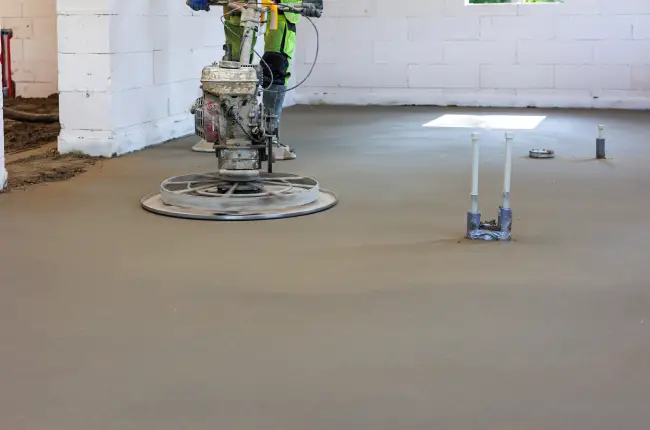
Construction schedules often leave little room for delays. When flooring needs to be ready quickly for subsequent trades or tight project deadlines loom, standard screed drying times can become a significant bottleneck.
Fast drying screed technology has transformed how builders and contractors approach floor finishing, dramatically reducing waiting periods without sacrificing performance.
At Mitchell Plastering & Dry Lining Ltd, we understand the pressure of keeping projects on schedule.
Our floor screeding contractors provide fast drying screed solutions across the UK, helping commercial and industrial clients meet demanding timelines.
With over 20 years of experience in floor screeding, we know exactly when rapid drying products deliver the best results and how to install them for optimal performance.
Understanding Fast Drying Screeds
Fast drying screeds use specially formulated materials that release moisture much qui... -
Underfloor Heating & Anhydrite Screed Installation In Ilkeston
Location: Ilkeston, Derbyshire
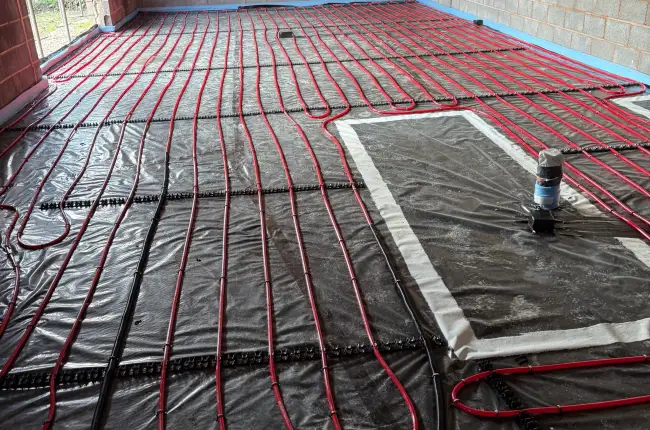
A property owner in Ilkeston required a complete underfloor heating and floor screeding solution for their 157m² property. Mitchell Plastering & Dry Lining Ltd was tasked with installing a full wet underfloor heating system with liquid anhydrite screed, providing an energy-efficient heating solution with a smooth, level floor finish.
Click Here
The project required careful coordination and expert installation to complete all work within a single visit, allowing the customer to return to the property the following day.
The Underfloor Heating Installation Process…
Polythene DPM Installation
The first stage involved laying a polythene damp proof membrane (DPM) across the entire floor area. This membrane provides essential protection against moisture rising through the floor structure, preventing damp problems that could damage the screed and compromise the underfloor heating system.
Polythene DPM comes in sheets that must be laid with overlaps at the joints. Our team positioned the membran... -
The Benefits Of Pump-Applied Screed
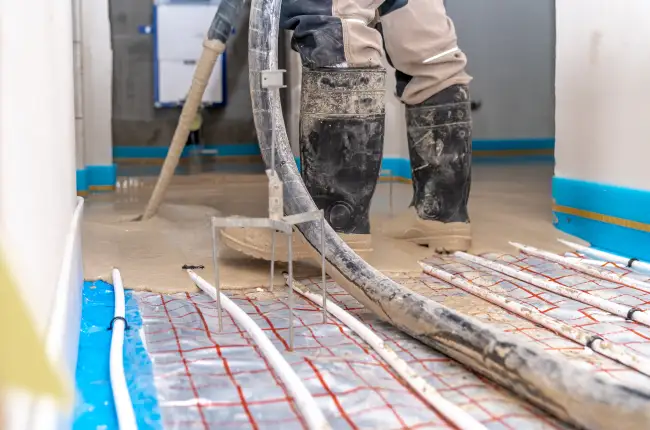
When undertaking substantial construction projects, the method used to apply floor screed can significantly impact efficiency, quality, and project timelines. Pump-applied screed has revolutionised how contractors approach large-scale flooring installations, offering advantages that traditional hand-laying methods cannot match.
Click Here
What Is Pump-Applied Screed?
Pump-applied screed involves using specialist pumping equipment to deliver liquid screed materials directly to the installation area. The screed is mixed off-site or in a dedicated mixer, then pumped through hoses to precisely where it's needed. This method works particularly well with flowing screed materials like anhydrite or self-levelling compounds.
The process differs fundamentally from traditional methods where workers manually mix, transport, and spread screed using wheelbarrows and hand tools. Pump application allows for continuous flow of material, creating a seamless installation process.
Speed & Efficiency
The most st... -
How Underfloor Heating Works With Different Floor Coverings

Underfloor heating is one of the most efficient and comfortable ways to heat a property. Unlike traditional radiators that heat the air in a room from a single point, underfloor heating distributes warmth evenly across the entire floor surface, creating a consistent and pleasant temperature from the ground up.
Click Here
However, not all floor coverings work equally well with underfloor heating systems. The material you choose for your finished floor can have a significant impact on how effectively heat transfers into the room, how quickly the system responds and what your overall running costs will be. Understanding how different floor coverings behave with underfloor heating will help you make the right choice for your project.
How Heat Transfers Through Floor Coverings
The key principle to understand is thermal conductivity. Materials that conduct heat well allow warmth to pass through quickly and efficiently, meaning the room reaches the desired temperature faster and the system uses less... -
What Is A Damp Proof Membrane And Why Is It Important Under Screed?
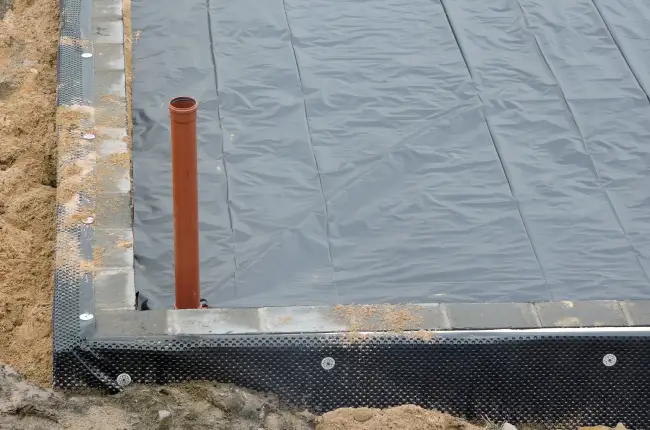
When it comes to floor screeding, much of the focus tends to fall on the screed itself, the mix, the depth, the drying time and the finish. However, one of the most important elements of a well-executed floor build-up is something that sits entirely out of sight once the job is done: the damp proof membrane.
Click Here
Getting this right is fundamental to the long-term performance of the floor, and skipping or cutting corners on it can lead to serious and costly problems further down the line.
What Is A Damp Proof Membrane?
A damp proof membrane, commonly referred to as a DPM, is a sheet of heavy-duty polythene that is laid across the floor structure before insulation and screed are installed. Its primary function is to act as a physical barrier between the subfloor or ground below and the layers above, preventing moisture from rising up through the floor construction.
DPMs are typically manufactured from 1200-gauge or 500-gauge polythene, with the appropriate specification depending on the... -
What Is Anhydrite Screed & When Should You Use It?
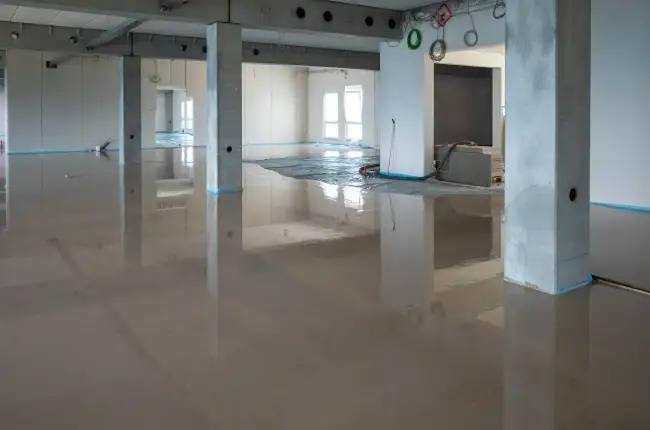
Anhydrite screed has become one of the most widely used flooring solutions in modern construction, and for good reason.
Click Here
Its flow characteristics, speed of installation and compatibility with underfloor heating systems make it a practical and increasingly popular alternative to traditional sand cement screed for a wide range of project types.
Here is what you need to know about anhydrite screed and when it is the right choice for your project.
What Is Anhydrite Screed?
Anhydrite screed, also known as calcium sulphate screed or liquid flow screed, is a flowing screed made from calcium sulphate binder mixed with sand and water.
Unlike traditional sand cement screed, which must be mixed on site and spread by hand, anhydrite screed is produced in liquid form and pumped directly into position, where it flows and self-levels across the floor area.
The result is a consistently flat, smooth surface that requires far less labour to install than a hand-applied screed and is considerab... -
Commercial Offices - Fast Drying Screed
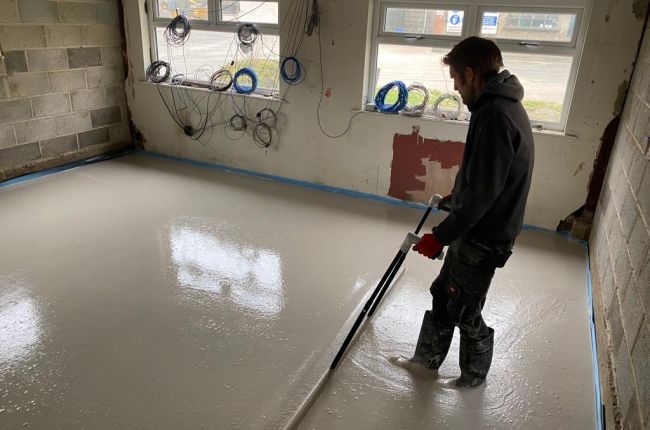
Location: Brassington, Matlock
Contract Duration: 1 Day
Working for a local client to convert this building into a commercial office.
Click Here
We installed a taped & lapped 1200 gauge membrane, 5mm perimeter isolation strip with fast drying screed supplied by Rightmix to cover 205m2. -
How To Avoid Common Floor Screeding Problems

Floor screeding forms a critical part of any construction project, providing the smooth, level surface needed for final floor coverings. However, numerous issues can arise during installation or curing if proper procedures aren't followed. Understanding these common problems and implementing preventative measures will save time, money and frustration whilst achieving professional results that last for decades.
Click Here
Most Common Floor Screeding Issues
Cracking & Shrinkage
Cracking represents one of the most frequent problems encountered with floor screed. Fine surface cracks often appear during the drying process, whilst deeper structural cracks indicate more serious issues. Several factors contribute to cracking, including inadequate curing, incorrect mix ratios, missing expansion joints and excessive drying speed.
Prevention starts with proper mix design. Traditional sand cement screed requires precise ratios, typically 1:3 or 1:4 cement to sand. Too much water weakens the screed and in... -
Enrok Construction - New Medical Centre
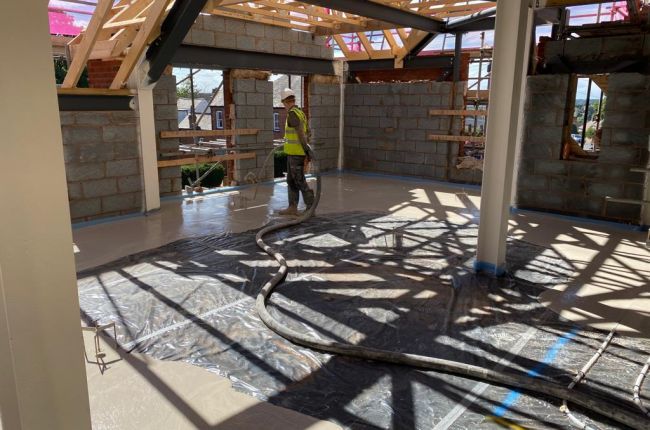
Location: Nuneaton
Contract Duration: 2 weeks
Our final update on Hartshill Medical Centre in Nuneaton for Enrok construction, we have now completed the installation of insulation, underfloor heating and liquid flow screed to both the ground floor and 1st floor.
Click Here
The ground floor consisted of 36m3 of Tarmac’s liquid flow screed (screed A) laid on 500gg polythene separating membrane on 120mm Celotex & 25mm EPS70 polystyrene along with a 25mm Celotex upstand to all exterior walls and a 5mm foam expansion strip to all walls.
On the first floor 32m3 of Tarmac’s liquid flow screed (screed A) laid on 500gg polythene separating membrane on 50mm Celotex & 15mm EPS70 polystyrene with a 5mm foam expansion strip to all walls.
Part of package included the installation of the underfloor heating which consisted of 6 manifolds (2 on the 1st floor and 4 on the ground floor). 16mm pipes, tracker clips, 42 thermostats and 52 thermal actuators.
The new medical centre will be a huge asset to the local community once it’s completed, we are pl... -
Liquid Screed Vs Traditional Sand Cement Screed: Which Is Better?
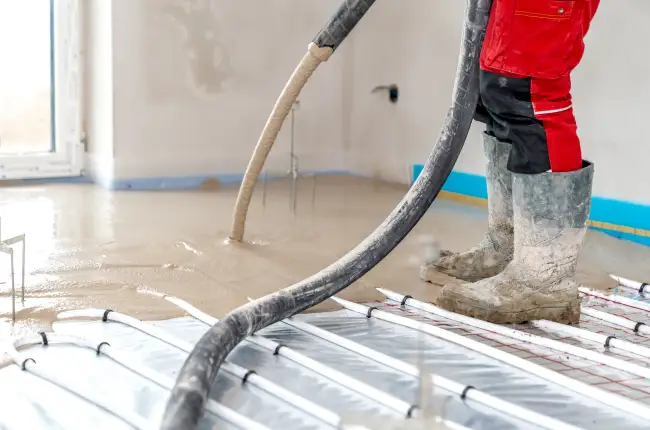
Choosing The Right Screed For Your Project
Click Here
When undertaking construction projects requiring level floor finishes, selecting appropriate screed material becomes crucial. The choice between liquid screed and traditional sand cement screed significantly impacts project timeline, costs and performance.
Both methods create smooth surfaces ready for floor coverings or underfloor heating. However, their application methods and performance characteristics vary considerably. At Mitchell Plastering & Dry Lining Ltd, our floor screeding contractors have experience with both materials, providing insights into when each performs best.
What Is Traditional Sand Cement Screed?
Traditional sand cement screed combines Portland cement with sharp sand in ratios typically 1:3 to 1:4.5 parts, mixed with water to create workable consistency. Skilled tradespeople spread and level the screed by hand using traditional tools. The material must be tamped and floated to remove air pockets, then finished with s...